two player games with interruptions
Choosing a two-player game when you might be interrupted
If you may need to step away, choose the game around that uncertainty rather than hoping it will not matter. Ask whether both players must be present, what the game preserves and how a return is handled. A safe reconnect path is useful, but it is not an unlimited pause promise.
Editorial draft · Content and language review pending before publication.
Decide whether synchronous play fits today
A game that requires two live participants needs an agreement about availability. EskiLab has exactly two roles; there is no bot partner that continues the order for an absent friend. If interruptions are likely to be frequent, a turn-based activity or a simple call may be a better fit for that evening.
- Can each person remain with their own device during an active order?
- Can you tell the other person before leaving when possible?
- Are you willing to wait, restart the current order, or stop if the return takes too long?
Understand what the prototype preserves
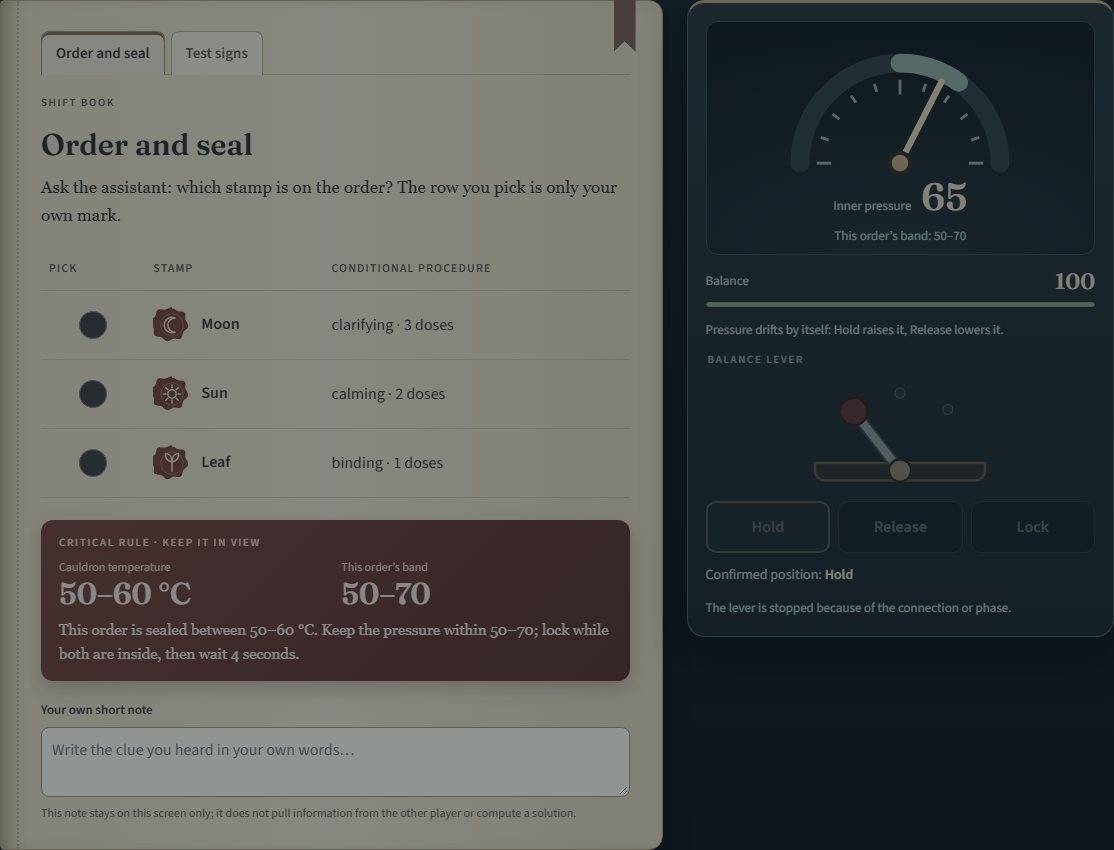
The implementation separates the game connection from voice and page visibility. When a participant is unavailable, active risk and elapsed play safely wait. Completed work is intended to survive recovery. Rejoining the same browser session matters; clearing cookies or switching devices can prevent recognition as the same guest.
This does not mean every current action is undone or that a room is reserved forever. Follow the actual return-window choices on screen. Voice may need to reconnect separately, and both players need to become ready again. Real phone locks and network handovers remain physical-device release checks. Do not treat an automated desktop test as evidence for your particular phone.
Imagine a delivery arrives during an order. On returning, do not immediately perform the material action mentioned before the doorbell. First confirm that you are still in that order, ask for the current observation and check whether the earlier action was acknowledged. If the room instead offers a restart or return-window choice, resolve that together before issuing gameplay commands.
Use a short handover before resuming
Once both are back, name the current experiment, repeat the current clue and confirm the last acknowledged action. If any of those changed during recovery, use the fresh screen state. Do not execute a remembered instruction merely because it was discussed before the interruption.
At a result, agree whether to begin another order. That boundary is more useful for ending a session than manufacturing a disconnect. If you cannot offer each other a reasonable return expectation, postpone the active puzzle. Protecting the conversation matters more than preserving a plan to finish everything tonight.