voice only game date
Planning a voice-only game date without making it an interview
A voice-only game can give a remote date something concrete to talk about without requiring a camera. It works best when both people want an active task. It is a poor substitute for conversation if one person wants to listen quietly or does not want microphone access.
Editorial draft · Content and language review pending before publication.
Agree on what kind of attention you want
Ask whether you both want to solve something, chat while doing something familiar, or simply catch up. A clue-sharing puzzle demands listening. It will interrupt open-ended conversation whenever a new observation needs an answer. That can be welcome structure, but it is not the same as an unstructured call.
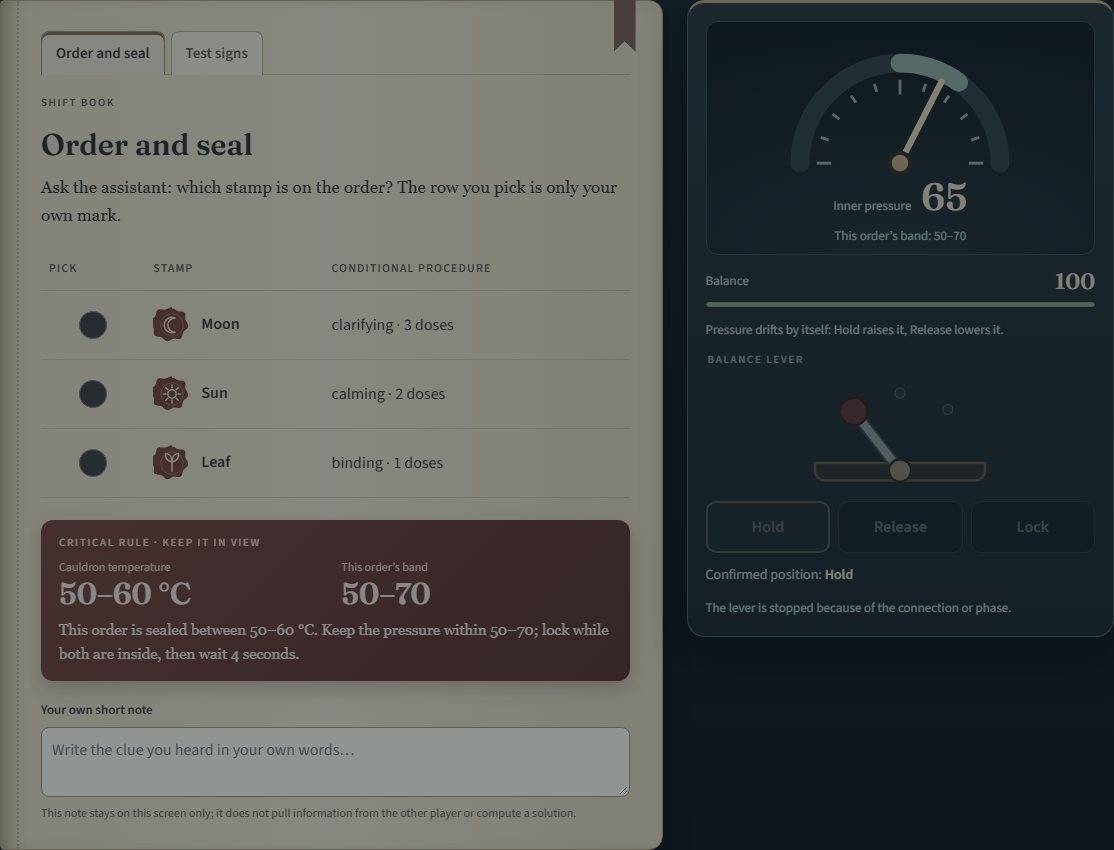
EskiLab requests audio, not camera access. Each player uses a separate browser and role. Before a remote session, check headphones, microphone permission and whether you can actually hear one another. The prototype has a voice implementation; real-device and relay acceptance remain separate checks, not proof that any pair of networks will work.
Keep one experiment separate from the whole evening
Agree to ask about continuing at the first result rather than promising a full night. Let each person choose a role by interest. Reading a rule book does not make one person the teacher, and handling the cauldron does not make the other a test subject. Your job is to exchange incomplete information.
For example, one person might want to tell a story while the other is still checking an active gauge. Agree that a brief game-related question can interrupt that story, then return to it at the result. If neither of you likes that rhythm, stop the puzzle and continue the call. The useful outcome is finding a comfortable activity, not proving you can finish one.
- Before: confirm microphones and a comfortable stopping point.
- During: ask for the detail you need instead of grading the explanation.
- After: ask “another order or more conversation?” and accept either answer.
Do not turn success into a compatibility score
A failed order may reflect unfamiliar controls, a missed clue or a connection issue. It does not measure trust, intelligence or romantic compatibility. If frustration becomes the main topic, stop the challenge; neither person owes the other a successful ending.
The introductory three experiments are free and need no account. That makes a trial possible without a purchase decision becoming part of the date. No observed relationship benefit or tested date-night success rate is claimed here. Choose this format for the activity itself, and leave space to change your mind.