prepare for co-op puzzle without spoilers
How to prepare for a co-op puzzle without reading the solution
Prepare the connection and controls; leave the matching rule and final recipe for the game. That boundary avoids two frustrating extremes: spending the session on microphone setup, or reading so much beforehand that your partner has nothing left to discover.
Editorial draft · Content and language review pending before publication.
Sort advice into three zones
Logistics are safe to learn in advance: devices, invitation, audio and how to leave. Tool literacy explains what a control does, such as testing a sample or setting a lever. A solution identifies the correct choice for the current order. Read the first two zones and stop before the third if discovery is your priority.
- Safe setup: each player opens the same room from a separate device.
- Useful tool knowledge: wait for a command acknowledgement before repeating an action.
- Keep for play: which observed sample matches the book and what the current order requires.
Practise a handoff rather than a recipe
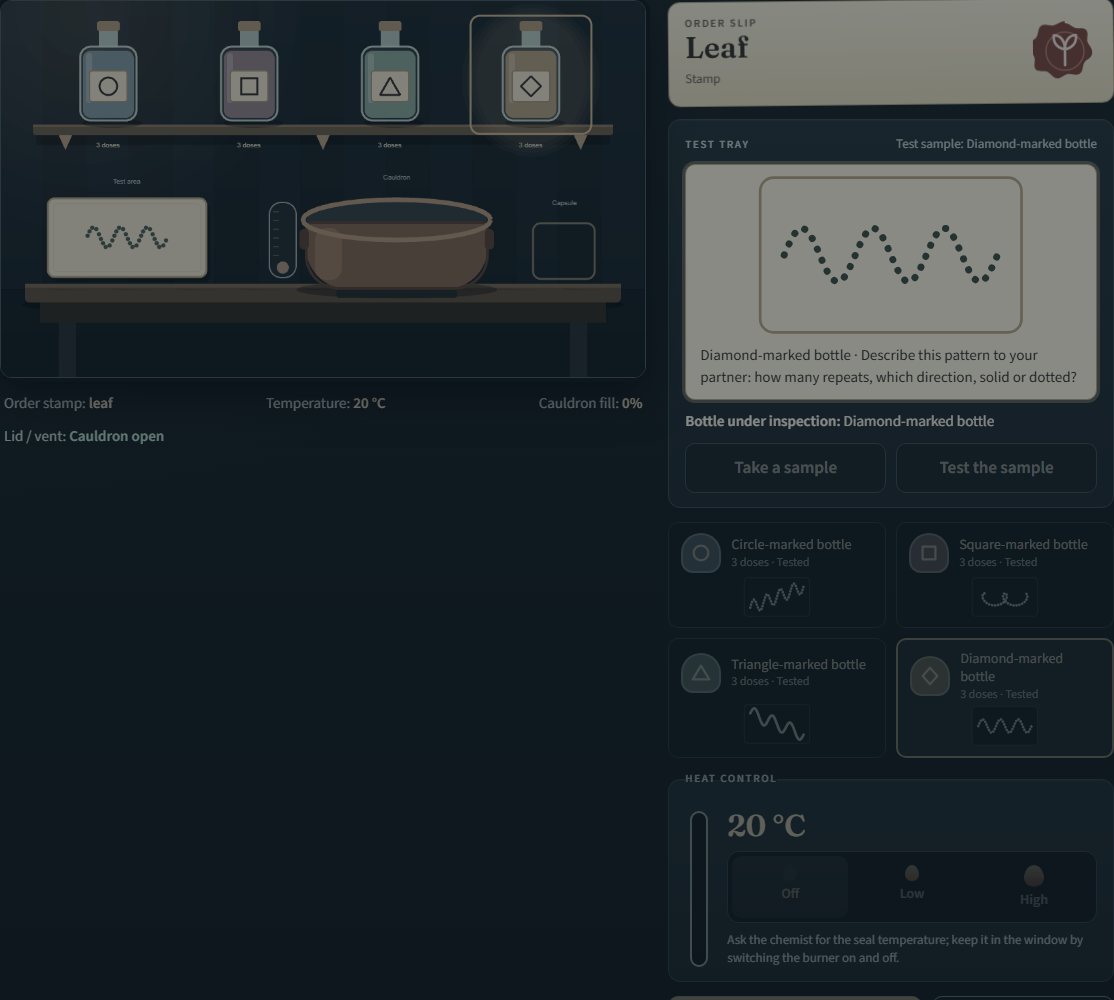
Describe an ordinary shape on paper without pointing at it: count its parts, describe the direction and mention a texture. Ask your partner which detail was unclear. This is a communication exercise, not a generated game clue, and it reveals no correct bottle.
In the lab, use the same habit to separate observation from interpretation. The assistant reports what happened; the chemist explains what the book implies. Both then act through their own controls. Showing each other every screen or reading a solution removes some of the information gap the game is designed around. You can choose to do that, but it changes the experience.
A useful preparation message says “open your own browser, bring headphones and choose a role.” A message that says “test this particular bottle and use this quantity” crosses into solving. When sending a friend a guide, choose the setup page rather than a remembered answer. You can reduce avoidable friction without deciding what the first experiment should reveal.
Know the limits before accepting the invitation
The free introduction has three experiments and no account requirement. Remote play uses voice and microphone permission; the camera is not requested. Relaxed pace is a joint setting, not a way to turn every challenge into an untimed sandbox. If either person needs a different format, decide that before a timed order starts.
Current prototype documentation and support pages explain setup and recovery. They are not evidence that every device/network has passed physical acceptance. Once setup is comfortable, close the preparation tabs and let the two role views provide the remaining information.